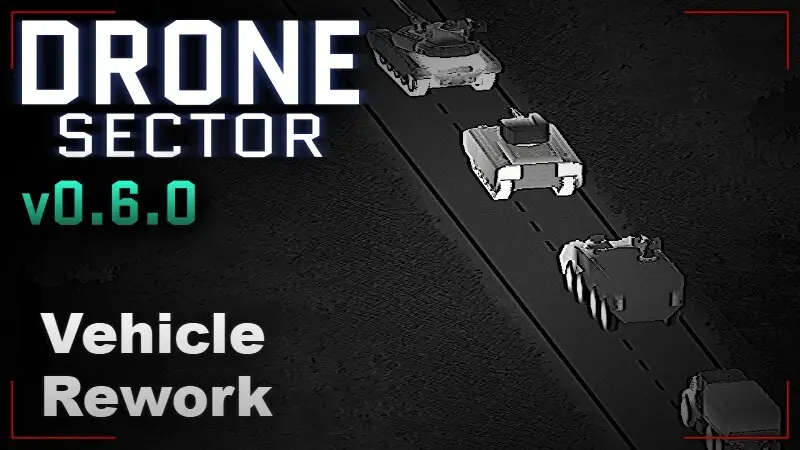
Vehicle Rework
After the previous content-heavy update, I was in the mood to do something more code-heavy again. I also had an idea for a more radical change to how vehicles move, which I had been considering for a while. I knew it would take some time, but after v0.5, it seemed like a good opportunity to try it.
The result is a complete rework of vehicle movement. Vehicles should now drive considerably more reliably, get stuck less frequently, and have a smaller performance impact, especially in missions with large numbers of vehicles.
For about two years now, vehicles in Drone Sector have been physics-based. They moved by applying forces through their wheels, while collisions with the environment and other vehicles were handled by the physics system.
Back in 2024, I thought this would make vehicle movement look more realistic and satisfying, especially since players can zoom in quite close to the action. Vehicles could slide off roads, tip over, crash into walls, or collide with each other.
In practice, most of these realistic interactions ended up causing more frustration than they were worth.
Vehicles would get caught on corners, struggle to climb slopes, slide off their intended paths, or get pushed around by other vehicles. Over time, I added various workarounds to deal with these problems. Rounded colliders to help vehicles slide around corners, extra throttle when climbing hills, recovery systems for overturned vehicles, and eventually even a system that teleported vehicles forward if they failed to make progress.
I realized that I was spending quite a lot of time trying to prevent the very situations that the physics simulation made possible.
For a game where players are mostly commanding units from a distance, having vehicles reliably reach their destinations is considerably more important than simulating every wheel and collision.
With the new system, vehicle movement no longer relies on physics. Instead, vehicles move directly along the navigation mesh surface, similarly to infantry.
Unlike infantry, vehicles still have limitations on how they can move. They need to drive forward or backward, and most vehicles cannot turn on the spot under normal circumstances. Their turning is now simulated directly rather than being a result of the front wheels steering. There are also some exceptions, such as allowing vehicles to turn on the spot when they would otherwise get stuck against an obstacle.
The system also makes better use of the additional road navigation data introduced in the previous update, allowing vehicles to follow roads more closely and reliably.
Vehicle-to-vehicle collisions have been disabled as well. Vehicles still try to avoid each other, but when avoidance fails, they can drive through each other instead of getting stuck, bouncing around, or causing a traffic jam. There is a small visual push-away effect when vehicles get too close, to make these interactions look a little more natural.
Wheels are now purely visual. They still react to the ground and rotate as vehicles move, but when a vehicle is far away or outside the camera view, those calculations can be skipped entirely.
Overall, the new system is much simpler to control and considerably cheaper to simulate. It's not as physically realistic as before, but I think it's a much better fit for the gameplay.
Tree Destruction
Tree avoidance was another part of vehicle movement that I wanted to improve.
Previously, trees were included directly in the navigation mesh data, with a small cutout around each tree. With most maps containing around 30,000 trees, this made paths through forests unnecessarily complicated.
Now, trees are handled separately through a lightweight data system. Units can plan much simpler paths through forests and check nearby trees while moving, adjusting their direction to avoid them.
This also gave me an opportunity to make trees react to vehicles.
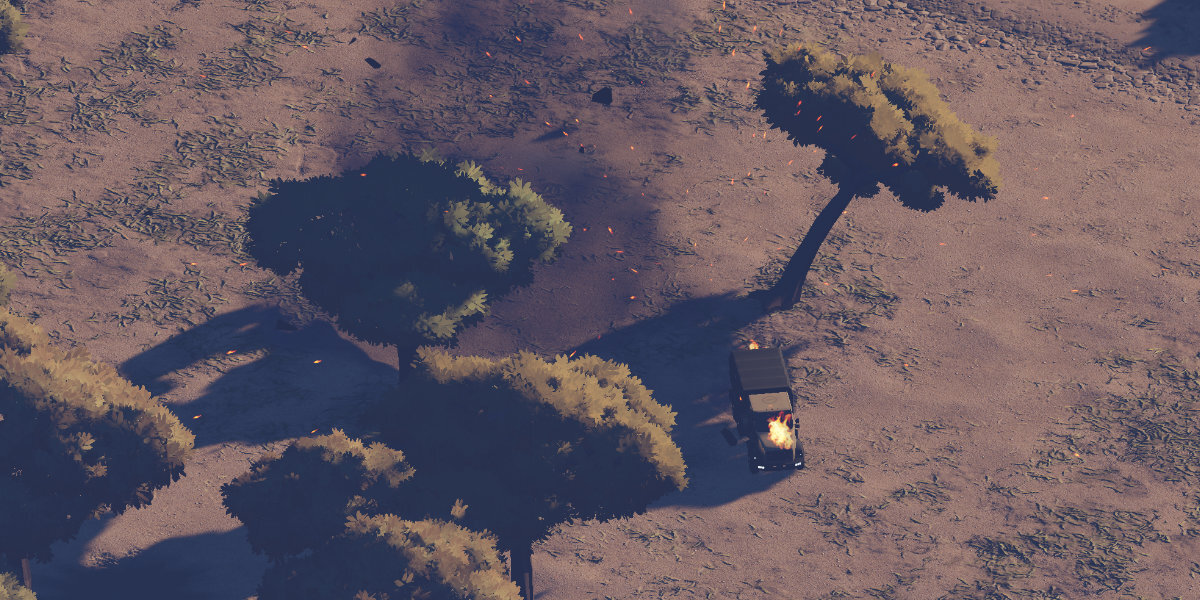
When a vehicle drives close to a tree, both the vehicle and tree can get pushed around slightly. If a vehicle actually drives through a tree, the tree gets destroyed instead.
The destruction itself is fairly simple visually, but I think it adds quite a lot to the battlefield.
And since tree destruction was already implemented, I also added it to explosions. Gunship weapons, ground units, and vehicle death explosions can now knock down trees as well.
This means that forests are no longer completely static, and larger battles can leave quite a visible impact on the environment.
Roadkills
With the new tree interaction system in place, it wasn't particularly difficult to add something similar for infantry.
Player-controlled vehicles can now run over enemy infantry, killing soldiers that fail to get out of the way.
For now, I've intentionally limited this to player vehicles against enemy infantry. Allowing enemy vehicles to run over player squads could become quite frustrating, especially when infantry pathfinding or avoidance fails.
As another benefit of the new vehicle system, infantry can now recognize vehicles as navigation obstacles more reliably. This should help them move around vehicles instead of simply walking through them.
Other Improvements
Besides the vehicle rework, there are also some smaller gameplay improvements.
Protect objectives should now be a little more manageable. Enemies can no longer spawn within 140 meters of the objective, and the initial period during which enemies ignore the protected target has been increased from 20 to 60 seconds. This should give players more time to move their units into defensive positions.
I've also considerably reduced the aiming delay for gunship weapons, especially when switching between targets at opposite ends of a map. This should make engaging distant targets in quick succession feel more responsive.
A new HUD marker now indicates where enemy flak fire has been detected, making it easier to locate anti-air threats.
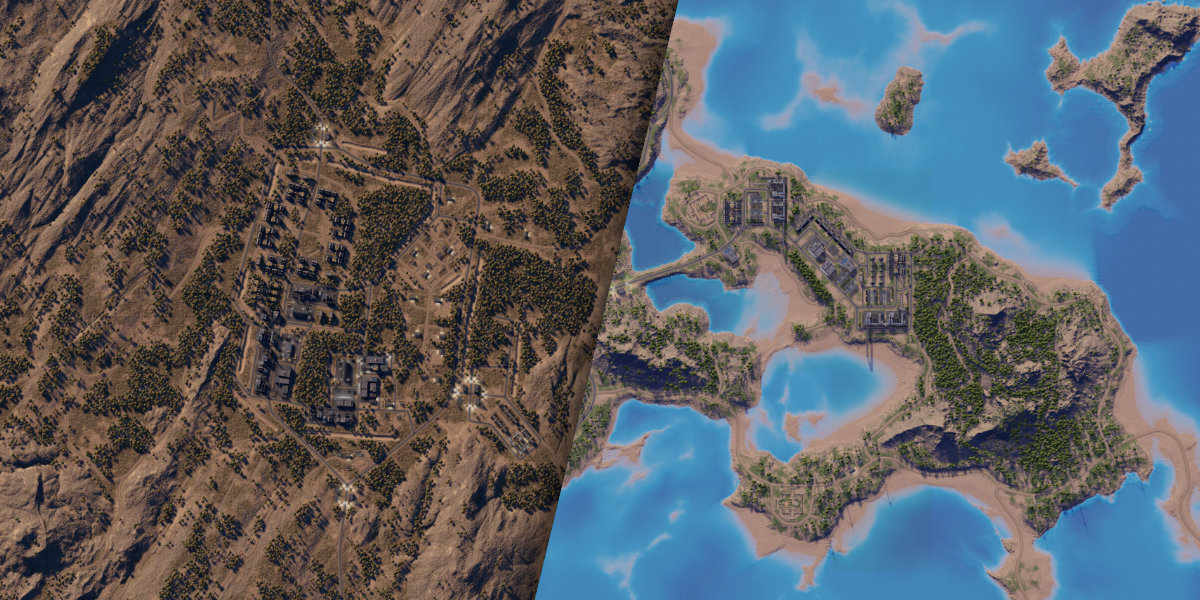
Finally, I've expanded the road networks on Coastal Refinery and Foothill Fringe with additional paved and dirt roads.
What's Next
After v0.5, I was planning to start work on Weekly Challenges, something that has also come up in recent player discussions.
However, I ended up getting into the vehicle rework instead. Like many players, I've been frustrated by vehicle driving for quite a while, and I wanted to finally address the underlying problems rather than continue adding workarounds.
With that rework now largely completed, I intend to return to my previous plans.
- Ingmar
Full Patch Notes
Added
- Trees now sway when vehicles bump into them.
- Vehicles can now crush trees by driving through them.
- Trees can now be destroyed by explosions from gunship weapons, ground units, and vehicle deaths.
- Player-controlled vehicles can now run over and kill enemy infantry.
- Added a flak fire detection marker to the HUD, indicating where enemy flak fire has been detected.
- Expanded the road networks on Coastal Refinery and Foothill Fringe with additional paved and dirt roads.
Changed
- Completely reworked vehicle movement, improving driving reliability, road following, and obstacle avoidance.
- Vehicles no longer physically collide with each other, preventing collisions from causing traffic jams or overturning vehicles.
- Updated icons for IFVs, APCs, MBTs, rifle infantry, AT infantry, and shotgun breacher infantry.
- Mission generator now prioritizes placing extraction points within allied territory when possible.
- Enemies can no longer spawn within 140 meters of protect objectives, giving players more time to prepare their defenses.
- Increased the initial period during which enemies ignore protect objectives from 20 to 60 seconds.
- Greatly reduced gunship weapon aiming delays, allowing players to engage distant targets in quick succession. Aiming delay is now less dependent on the distance between targets.
Fixed
- Vehicles can once again explode upon destruction, depending on the damage type of the killing blow. HE and HEAT are more likely to cause ammunition cook-off and explosions than AP rounds or fragments.
- Newly spawned enemy squads should no longer get stuck at their spawn locations when no objectives remain on the map.
Known Issues
- Vehicles can occasionally clip through terrain near steep elevation changes.
- Immobilized vehicles can sometimes behave or appear unnaturally.
Technical
- Replaced physics-based vehicle driving with a non-physics movement system that directly controls vehicle positioning and turning.
- Reworked tree avoidance. Instead of cutting holes around individual trees in the navigation mesh, units now check nearby trees dynamically and adjust their movement to avoid them.
- Vehicles now use additional road navigation data to follow roads more reliably.
- Improved vehicle movement performance, reducing the overhead of missions with large numbers of vehicles.
- Vehicle wheel positioning and rotation are now only calculated when vehicles are nearby and visible.