In this dev log, I'd like to share more about the way that sensors are simulated in Battlespace Command.
Sensors are crucial to modern warfare, enabling your forces to detect, identify, and engage the enemy. Sensor simulation has been a major focus of development effort for some time. Battlespace Command uses a realistic, physics-based simulation of visual, infrared, radar, and sonar sensors to ensure the capabilities of units are true-to-life.
Visual and Infrared Detection
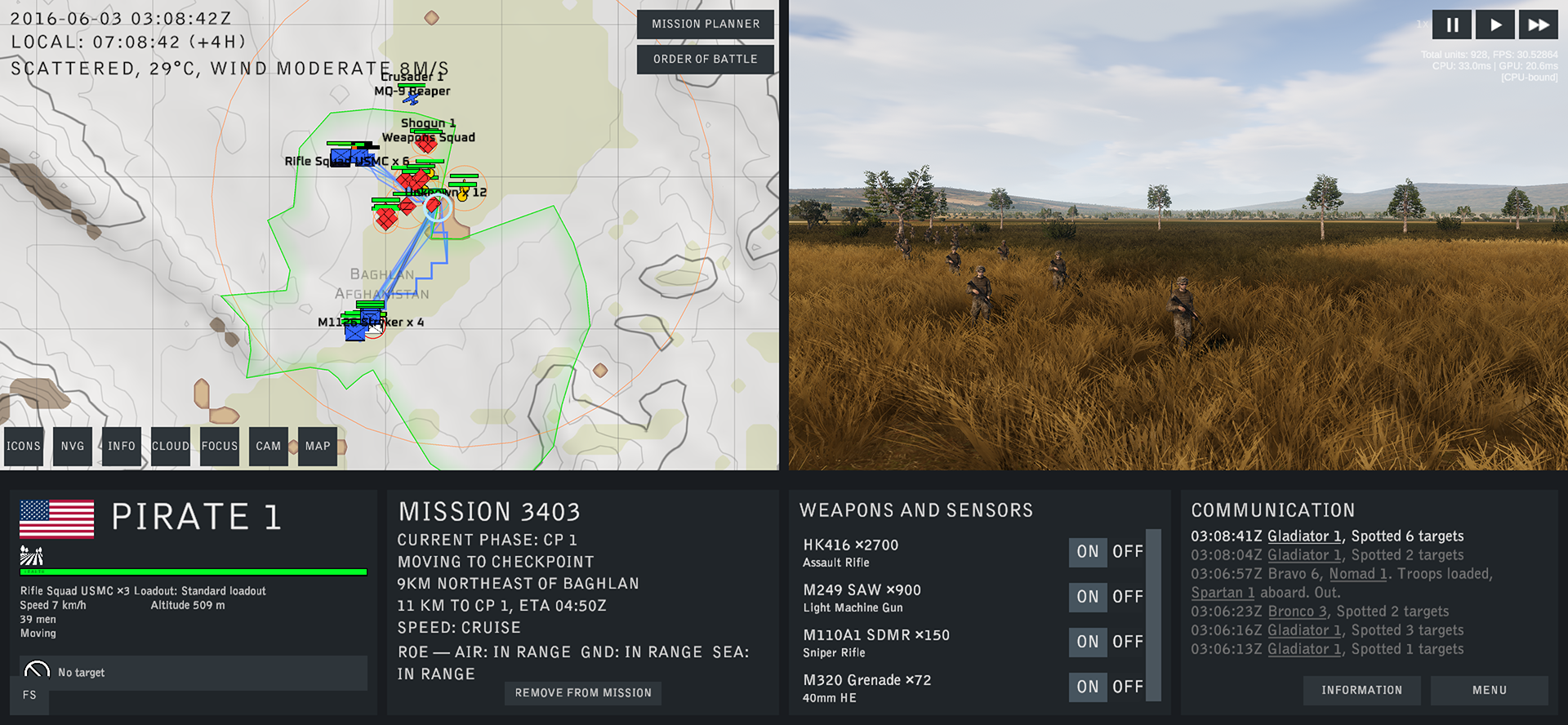
Nearly all units in the game can detect nearby enemies visually - either via cameras or just crew looking around. The ability to detect and identify a target visually depends on the size of the target, whether it is moving, and the type of terrain in which it is located. However, visual detection is only possible over relatively short distances. It is affected by cloud cover, and is further reduced at night - though units equipped with night vision devices suffer a smaller penalty.
Infrared sensors perform similarly to visual sensors, but can offer greater range and increased ability to detect certain target types. Their sensitivity depends on the temperature of the target.
Radar, ELINT, and Electronic Warfare
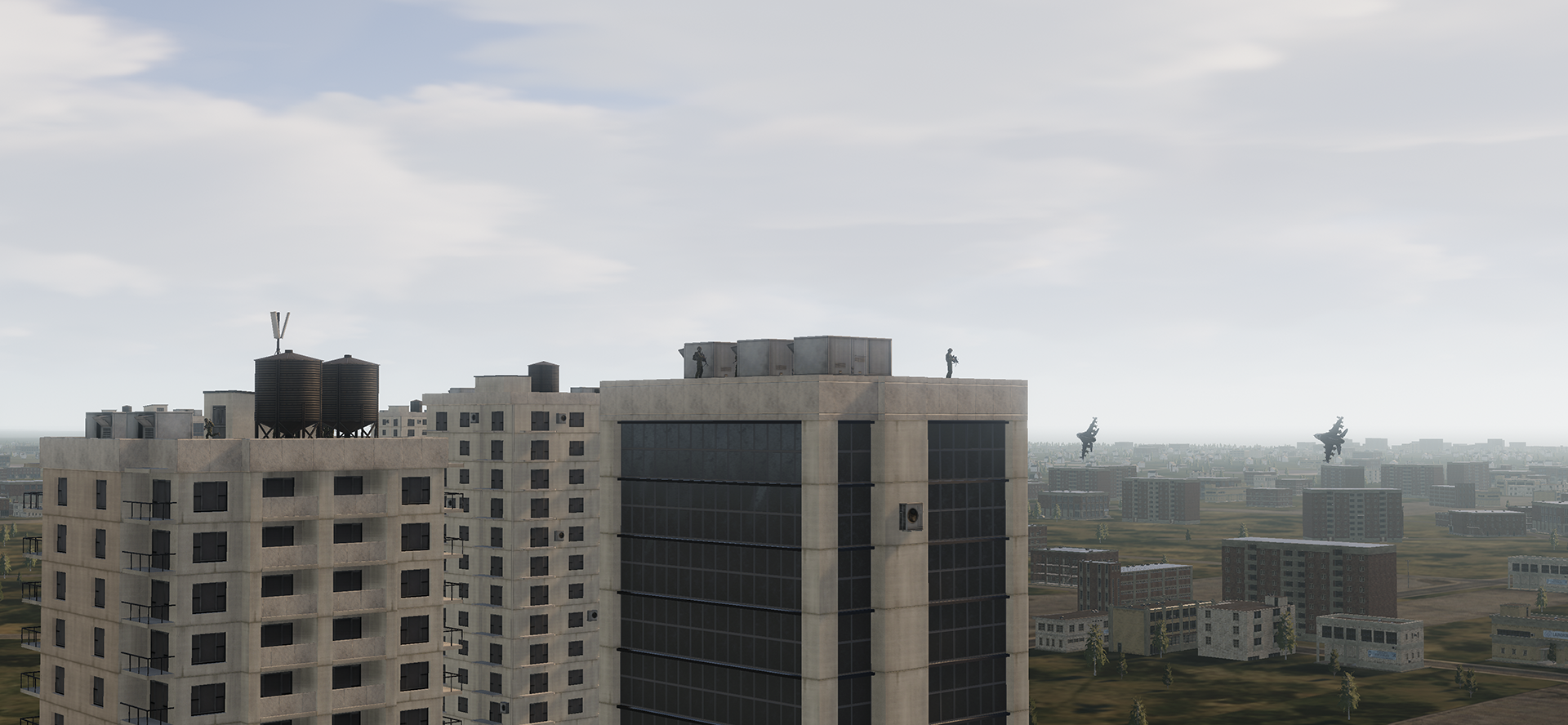
Radar can detect units over far greater distances than visual or infrared sensors, but comes with its own set of tradeoffs.
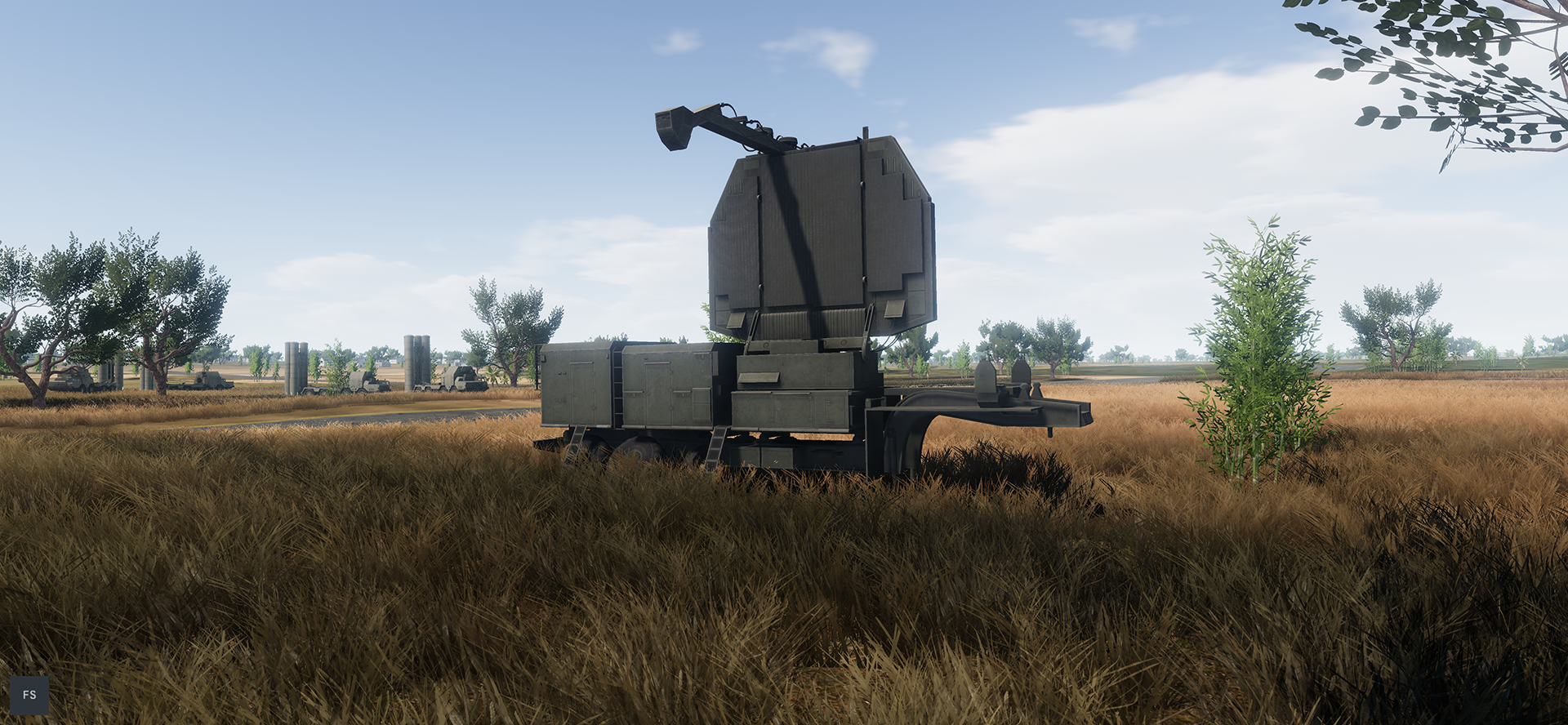
Battlespace Command implements a fairly detailed, physics-based model for radar detection. The radar simulation model incorporates:
- Signal power and attenuation by distance
- Masking of radar signals by terrain, and the effects of the curvature of earth
- Radar cross section for each unit, varying by aspect; ranging from the tiny 0.0001 m² frontal RCS of a modern stealth fighter to the massive 100,000 m²+ side-aspect RCS of an aircraft carrier.
- Background noise, weather effects, and terrain clutter
- Offensive electronic countermeasures (i.e. jamming; affects radars looking toward the jammer, as well as interfering with GPS guidance and communication links)
- Electronic intelligence - enabling detection and classification of hostile radar signals
- Low-probability-of-intercept mechanisms, reducing detectability of radar emissions
- Notching / beaming older radars
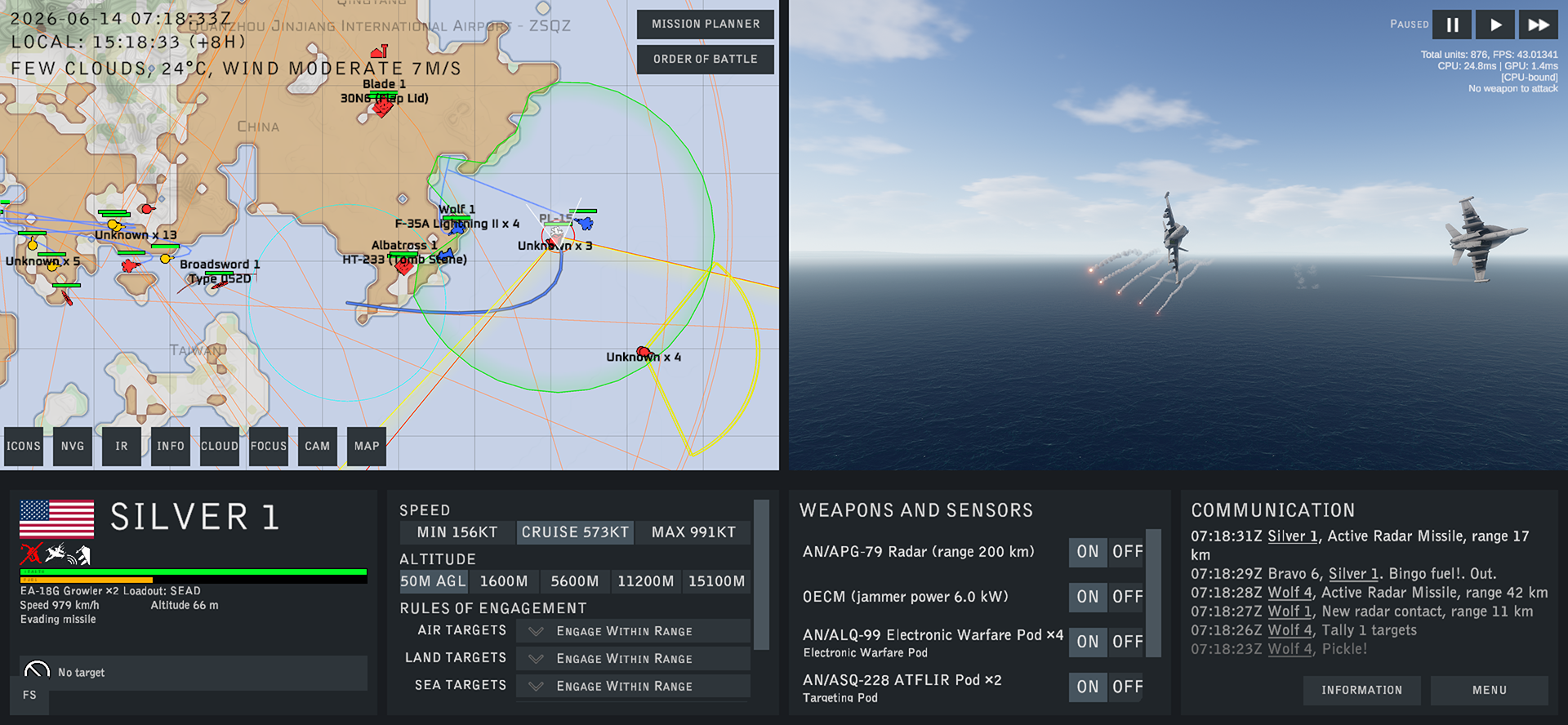
The simulation is detailed enough that realistic behaviour emerges naturally. For example, stealth is immensely valuable when used correctly, but becomes far less useful if you leave radars & OECM on.
Sonar
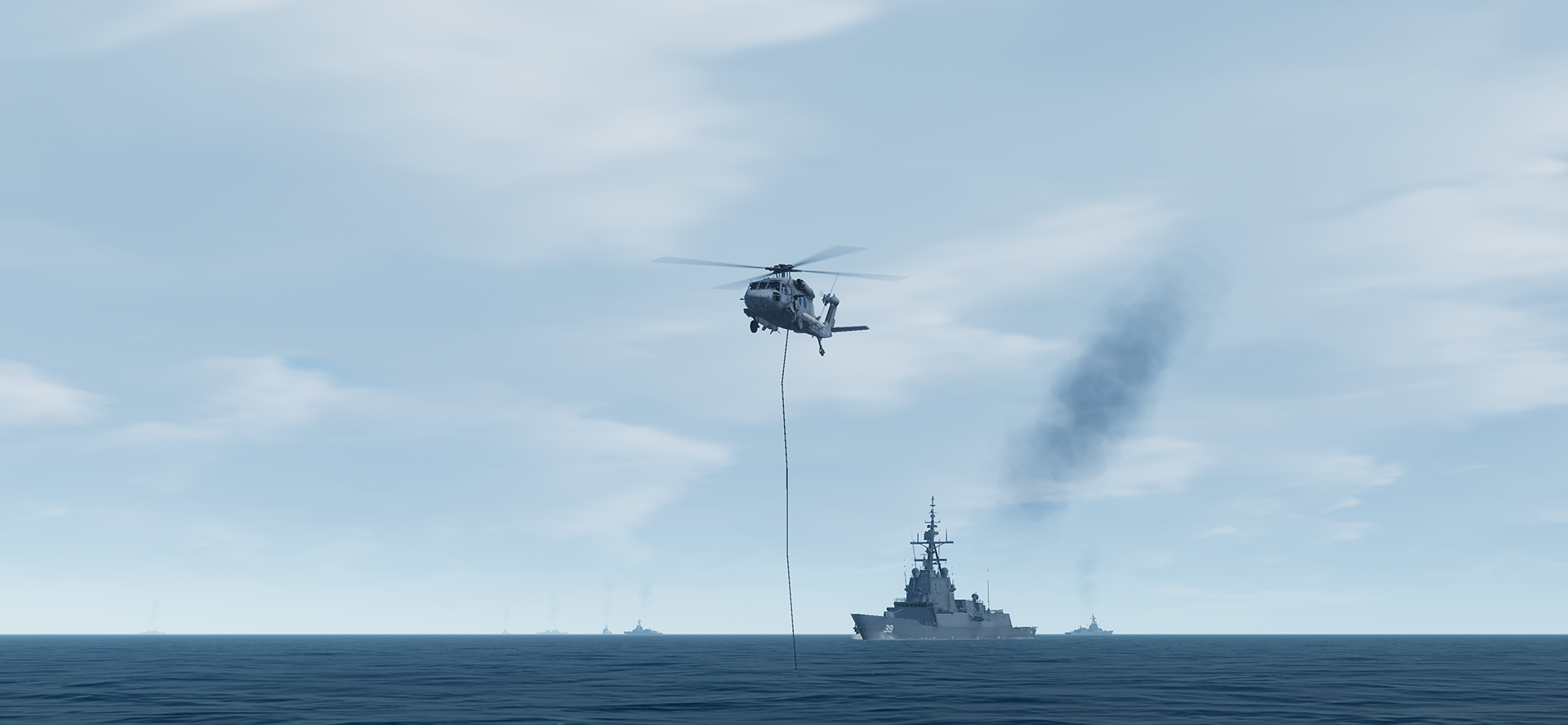
Sound is the primary way that a submarine can be detected underwater, as well as the primary way the submarine locates and engages targets. The game simulates active and passive sonar, towed sonar arrays, and helicopter dipping sonar.
The sonar simulation takes into account the noise level of the target, self-noise from the vessel carrying the sensor, frequency-dependent (Thorp) absorption, thermocline effects, as well as the specific performance of the individual sensor.
Weapons
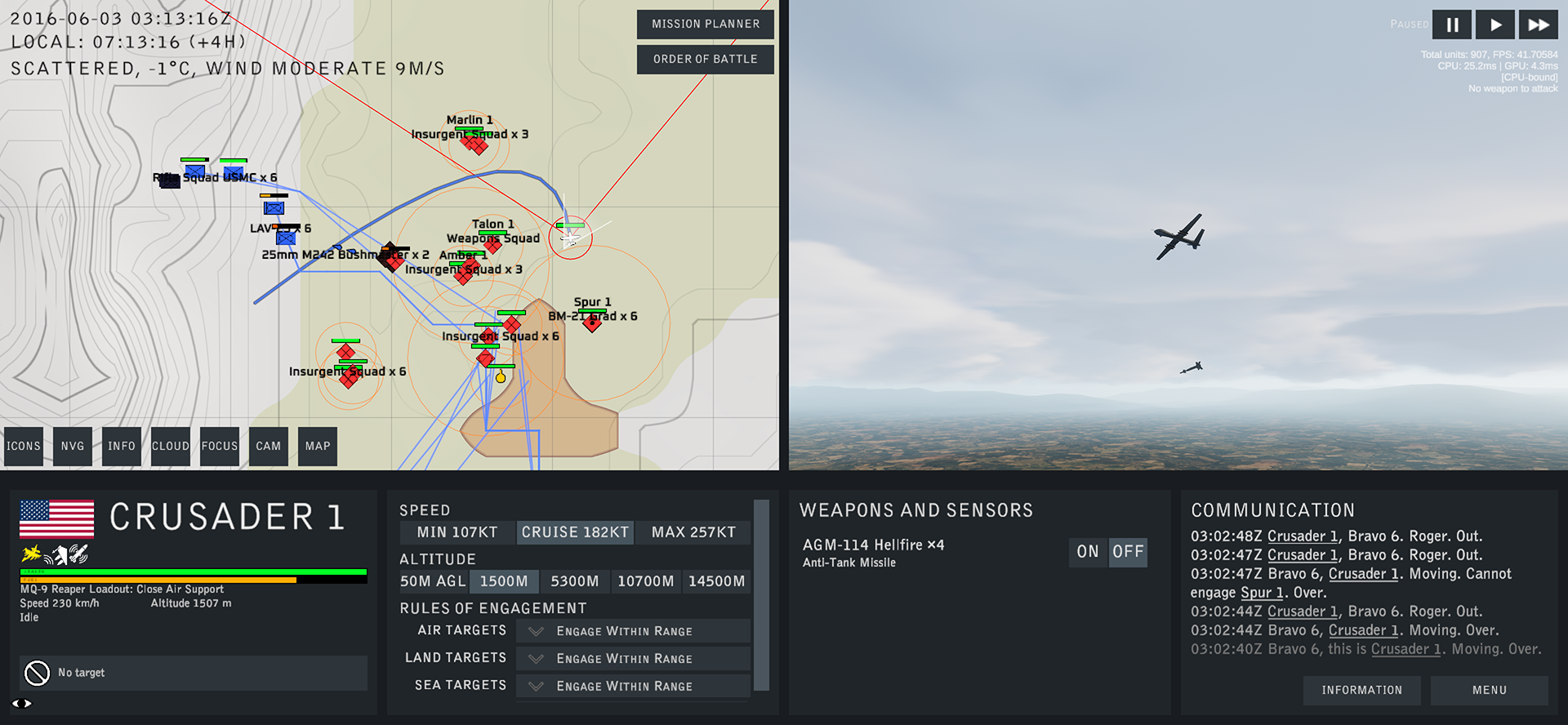
In addition to detecting and identifying the enemy, sensors play a key role in guiding weapons. For example:
- Laser-guided bombs require laser designation to guide to their target; the laser has similar limitations to visual detection.
- Active and Semi-Active Radar Homing Missiles require a radar lock on the target, and are susceptible to jamming, notching, and similar.
- GPS guided weapons don't require ongoing guidance from the launching unit, but will drift off-course in the presence of strong jamming.
- Anti-radiation missiles, which detect emissions from hostile radars.
Building out the simulation of each type of sensor has been a major focus of the past few months, and the system is now largely complete. The next priority is upgrading the UI to ensure the player can more clearly see and understand all of this information.